
Did you know that ignoring car maintenance can cause expensive repairs and safety risks? As a car owner, knowing the basics of car care is key to keeping your vehicle in good shape.
Maintaining a car can seem overwhelming, but we’re here to help. We’ll share simple and effective car maintenance tips to keep your vehicle in top condition.
Our advice will help your car run smoothly and avoid expensive repairs later. Regular maintenance is vital to extend your car’s life and ensure safety on the road.
Key Takeaways
- Regular car maintenance is key for safety and efficiency.
- Simple car care tips can help you avoid costly repairs.
- Understanding the basics of car maintenance is essential for total beginners.
- Effective car care can extend the life of your vehicle.
- Proper maintenance can help prevent safety hazards on the road.
Understanding Your Vehicle Basics
Before you start caring for your car, it’s key to know its basic parts and what they do. Knowing your car’s basics is important for keeping it running well. We’ll show you the main parts of your car, explain dashboard symbols, and talk about the different fluids your car needs.
Familiarize Yourself with Car Components
Your car has many important parts that work together. These parts include:
- The engine, which is the heart of your car
- The transmission, which helps in gear shifting
- The brakes, which are essential for stopping your car
- The suspension, which affects your car’s handling and ride comfort
Know Your Dashboard Symbols
Your car’s dashboard has symbols and warning lights that show its status. Some common symbols are:
- The check engine light, which indicates a problem with your engine
- The oil can symbol, which signifies low oil levels or pressure
- The temperature light, which warns of overheating
Understanding these symbols is key for taking quick action when needed.
Understanding Fluid Types and Levels
Your car needs several types of fluids to run well. These include:
- Engine oil, which lubricates your car’s engine
- Coolant or antifreeze, which regulates engine temperature
- Transmission fluid, which makes gear shifting smooth
- Brake fluid, which is vital for your car’s brakes
Checking these fluid levels regularly and keeping them at the right levels is important for your car’s health.
Timely Maintenance Schedules
Keeping your car in good shape is key for both its life and safety. It’s important to follow a maintenance schedule. This helps prevent damage and keeps your car running well for a long time.
Importance of Regular Oil Changes
Changing your oil regularly is essential for your engine’s health. Oil keeps the engine’s parts moving smoothly and prevents rust. It also cleans out dirt and debris.
Oil should be changed every 5,000 to 7,500 miles. This depends on your car and how you drive. Always check your owner’s manual for the best schedule.
- Improves engine performance
- Reduces engine wear and tear
- Helps to improve fuel efficiency
Tire Rotation and Pressure Checks
Rotating your tires and checking their pressure are key for safety and even wear. Uneven wear can cause poor handling and increase the risk of a blowout.
Rotate your tires every 6,000 to 8,000 miles. Also, check the pressure monthly and before long trips. The right pressure improves fuel use and handling.
Keeping Up with Brake Maintenance
Brake maintenance is vital for safety. Worn-out brake pads can make stopping harder, raising the risk of accidents. Regular checks can spot problems early.
Check your brake pads every 10,000 to 15,000 miles. Look out for squealing or grinding when you brake. If you hear these sounds, get your brakes checked by a pro.
- Ensures safe stopping distances
- Reduces the risk of brake failure
- Helps to prevent costly repairs down the line
Essential Car Care Tools to Have
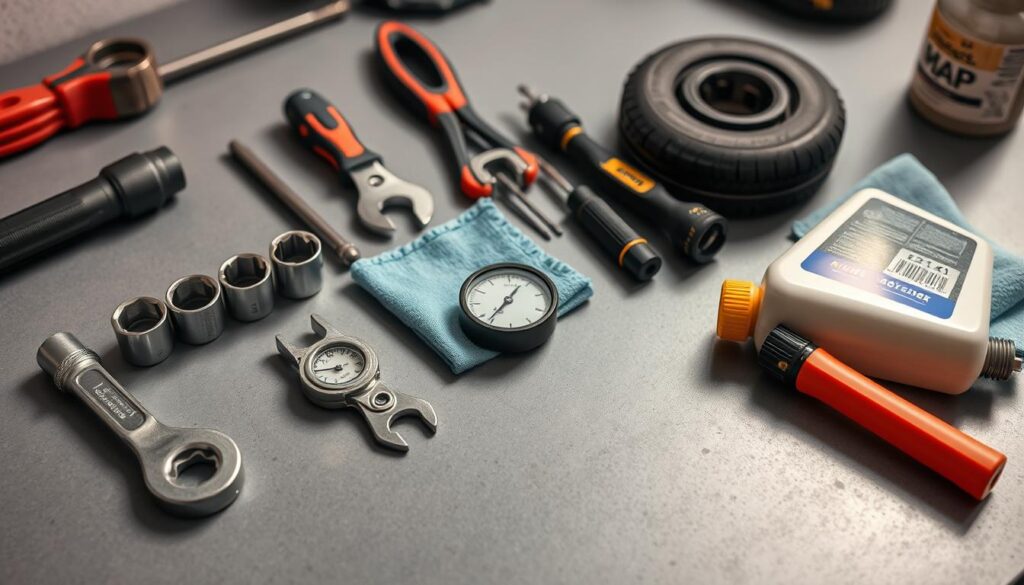
Car care can seem tough for beginners. But, the right tools make it easier. You’ll feel more confident in taking care of your car.
Must-Have Hand Tools for Beginners
Every car owner needs the right hand tools. Start with a basic toolkit. It should have:
- A socket set with various sizes
- A ratchet and extension
- Pliers and punch
- Screwdrivers (both flathead and Phillips)
- A wrench set
These tools will help you with small repairs and maintenance. You’ll become more self-sufficient in car care.
Basic Cleaning Supplies for Your Car
Keeping your car clean is important. It’s not just about looks. It also keeps your car in good shape. You’ll need:
- Microfiber cloths for interior and exterior cleaning
- A soft-bristle brush for delicate surfaces
- Car wash soap and a wash mitt
- Glass cleaner and a microfiber cloth for windows
- Interior cleaner and a vacuum cleaner
Regular cleaning keeps your car looking great. It also prevents wear and tear.
Useful Gadgets for Car Maintenance
There are gadgets that make car maintenance easier. Consider these:
- A tire pressure gauge for accurate pressure checks
- A battery tester to monitor your car’s battery health
- A car cover to protect your vehicle from the elements
- A diagnostic scanner for troubleshooting issues
These gadgets help you keep up with maintenance. They can also spot problems early.
With these tools and gadgets, you’ll become more confident in car care. Your vehicle will stay in great shape.
How to Check Fluid Levels
Checking your car’s fluid levels is key to keeping it running well. It helps avoid damage to the engine and other important parts. We’ll show you how to check your car’s essential fluids.
Engine Oil Inspection
Engine oil keeps your car’s engine running smoothly. To check the engine oil level:
- Make sure your car is parked on a level surface.
- Turn off the engine and let it sit for a few minutes.
- Locate the oil dipstick, usually labeled “Oil” or with an oil can symbol.
- Pull out the dipstick, wipe it clean, and insert it back into the oil reservoir.
- Pull it out again to check the level against the minimum and maximum marks.
If the level is below the minimum, you’ll need to top it off with the right oil. Always refer to your car’s manual for the correct oil specification.
Coolant and Antifreeze Check
Coolant, or antifreeze, keeps your engine at the right temperature. To check the coolant level:
- Locate the coolant reservoir, usually a transparent plastic tank.
- Check the level against the minimum and maximum marks.
- If the level is low, you’ll need to add a 50/50 mix of coolant and water.
Never open the radiator cap when the engine is hot, as this can cause serious injury.
Transmission Fluid and Brake Fluid Levels
Transmission fluid keeps your car’s transmission running smoothly. Brake fluid is key for your brakes. To check these fluids:
- Consult your car’s manual to locate the transmission fluid dipstick or reservoir.
- For brake fluid, locate the brake fluid reservoir, usually on the driver’s side.
- Check the levels against the minimum and maximum marks.
- Top off as necessary with the recommended fluid types.
Regular checks of these fluids can prevent expensive repairs. It keeps your car running well. By following these steps, you can keep your vehicle in great shape and drive safely.
Tires: Your First Line of Defense
Your car’s tires are its most critical contact with the road. They play a vital role in safety and performance. Keeping your tires in good shape is key to your vehicle’s handling and safety.
Understanding Tire Tread Depth
Tire tread depth is key to your vehicle’s safety and performance. The tread helps your tires grip the road, which is important in wet or slippery conditions. To check your tire tread depth, use a penny.
Insert the penny into the tire groove with Lincoln’s head facing down. If you see the top of Lincoln’s head, your tread is too low. This means it’s time to replace your tires.
Key benefits of proper tread depth include:
- Improved traction on wet or slippery roads
- Better handling and control of your vehicle
- Reduced risk of hydroplaning
How to Change a Flat Tire
Changing a flat tire might seem scary, but it’s a skill every driver should know. Here’s a simple guide:
- Find a safe spot to change your tire, away from traffic.
- Turn off the engine and engage the parking brake.
- Gather your tools: spare tire, lug wrench, and car jack.
- Loosen the lug nuts with the lug wrench before you jack up the vehicle.
- Raise the car using the jack until the flat tire is off the ground.
- Remove the lug nuts and flat tire, then replace with the spare tire.
- Tighten the lug nuts in a star pattern to ensure even tightening.
- Lower the vehicle and tighten the lug nuts as much as possible.
When to Replace Your Tires
Knowing when to replace your tires is important for your safety and vehicle’s performance. Here are signs it’s time for new tires:
- Tread depth is below 2/32″
- Tires are more than six years old, regardless of tread depth
- You notice uneven wear or damage to the tires
- Your vehicle is not handling as well as it used to
Replacing your tires at the right time keeps you safe on the road. It also helps keep your vehicle running well.
Keeping Your Car Clean and Tidy

Keeping your car clean is key for beginners. A clean car looks great and lasts longer. Here are some easy tips to keep your car spotless.
Exterior Washing Tips for a Great Shine
Washing your car often is vital to remove dirt and grime. Start by rinsing it well to get rid of loose debris. Then, use a mild car wash soap and a soft cloth or sponge to clean it.
Tips for a sparkling finish:
- Use a microfiber towel to dry your car to prevent water spots.
- Clean the wheels and tires separately using a dedicated brush and cleaner.
- Use a clean, dry microfiber cloth to wipe down the exterior and remove any remaining streaks or residue.
Interior Cleaning Essentials
Cleaning the inside of your car is just as important. Start by vacuuming the seats, carpets, and crevices to remove dirt and debris. Then, use a gentle cleaning product and a soft cloth to wipe down surfaces such as the dashboard, console, and doors.
Interior cleaning tips:
- Use a gentle cleaning product designed for car interiors.
- Avoid using too much water, which can damage electrical components.
- Use a microfiber cloth to clean surfaces and remove streaks or residue.
Waxing Your Car: Why and How
Waxing your car adds extra protection and keeps it shiny. To wax, wash and dry your car first. Then, apply a small amount of wax to a clean, soft cloth and rub it onto the paint in a circular motion.
Benefits of waxing your car:
- Protects the paint from UV damage and contaminants.
- Enhances the shine and appearance of your car.
- Helps to repel water and reduce the risk of rust.
Seasonal Car Care Tips
As the seasons change, your car’s needs change too. You need to adjust to keep it running smoothly. Different seasons bring different challenges for your vehicle. Being prepared is key to maintaining its health.
By following seasonal car care tips, you can ensure your car remains in good condition throughout the year.
Preparing Your Car for Winter Conditions
Winter can be harsh on your vehicle. Cold temperatures affect battery performance, tire pressure, and fluid viscosity. To prepare your car for winter:
- Check your battery’s health and charge level.
- Switch to cold weather tires or ensure your current tires have adequate tread depth.
- Use winter-grade windshield washer fluid.
- Keep your gas tank at least half full to prevent fuel line freeze.
Using the right antifreeze is also critical. Check your owner’s manual for the recommended type and ensure it’s at the recommended level.
Summer Maintenance Checklist
Summer brings its own set of challenges, including high temperatures. These can cause your car’s engine to overheat. Here’s a summer maintenance checklist:
- Check your coolant level and condition.
- Inspect your belts and hoses for signs of wear.
- Ensure your air conditioning is working properly.
- Check your tire pressure regularly, as it can fluctuate with temperature changes.
Regular summer maintenance can help prevent breakdowns. It keeps your car running efficiently.
Fall Leaf Cleanup Tips for Car Owners
Fall is a critical time to prepare your car for the coming winter. Leaves can clog your air intakes and cause issues if they get wet and stick to your car’s underside. Here are some tips:
- Regularly clean leaves from your car’s air intakes and around the windshield.
- Wax your car to protect the paint from the upcoming winter conditions.
- Check your wiper blades and replace them if necessary.
By following these Easy Car Care Tips for Total Beginners, you can ensure your car is ready for the changing seasons.
Spotting Warning Signs Early
Knowing when your car needs attention is key to keeping it running well. Spotting warning signs early helps fix small problems before they get big. This keeps your car in top shape.
Common Car Noises to Note
Strange noises from your car can mean trouble. Here are some noises you should listen for:
- Grinding or Squealing Brakes: Shows your brake pads are worn out or there’s a brake issue.
- Clunking or Clattering Noises: Means your suspension parts might be loose or worn.
- Hissing Sounds: Could be a leak in the cooling system or a vacuum leak.
What Your Dashboard Warning Lights Mean
Dashboard lights are there to warn you of car issues. Here’s what some common lights mean:
- Check Engine Light: It can mean anything from a loose gas cap to serious engine trouble.
- Oil Can Light: Shows your oil pressure or level is low.
- Battery Light: Means there’s a problem with your car’s charging system.
Knowing what these lights mean helps you deal with car problems fast.
Signs of Brake Wear and Tear
Brake problems need quick action. Here are signs you should watch for:
- Squealing or Grinding Noises: Means your brake pads are worn out.
- Soft or Spongy Brake Pedal: Could be air in the brakes or worn-out pads.
- Vibrations When Braking: Might mean your brake rotors are warped.
Spotting these signs early helps avoid serious brake problems.
Finding and Choosing a Mechanic
Every car owner will need professional help at some point. Knowing how to find a reliable mechanic can save you time, money, and stress. We’ll guide you through the process, helping you make informed decisions about your car’s maintenance.
Researching Local Mechanics
Begin by asking friends, family, or colleagues for mechanic recommendations. Online reviews on Yelp can also give you insights into a mechanic’s reputation. Look for shops certified by the National Institute for Automotive Service Excellence (ASE). This means they meet standards for car care and repairs.
Questions to Ask When Visiting a Shop
When visiting a mechanic, ask about their experience with your car’s make and model. Find out their pricing and what’s included in the initial inspection. A good mechanic will be clear about their costs and processes.
Understanding Repair Estimates
After getting an estimate, review it carefully. Make sure it lists parts and labor costs in detail. If you’re unsure about anything, ask for clarification. Being informed helps you make the best choices for your car’s maintenance.